What happens when Stimpee joins a Rust streamer server like Rust Isles?
Want articles like this for your own video to promote it on YouTube and Google? Order them through the Telegram bot @sat_sit_bot. It writes articles around your video, embeds the video and publishes them on popular niche websites (no ads). Your first 50 articles are free.
· based on the channel Stimpee
Rust streamer servers are invite-only private worlds where content creators play Rust under extra rules, admin supervision and a roleplay-friendly atmosphere. Stimpee's video "Not Another Rust Streamer Server" documents his return to that scene on the Rust Isles server, where pirate-themed roleplay and clan politics meet the usual Rust trolling. You can follow his live streams and see how those servers play out in real time on his Twitch channel.
What is a Rust streamer server and why does it exist?
A Rust streamer server is a private, whitelisted Rust server built for content creators rather than the general public. Access is by invitation, the population is small and known, and admins actively manage behavior that would be left to chaos on official servers.
The appeal is simple: public Rust wipes are dominated by large clans, cheaters and offline raids that make for frustrating footage. A streamer server gives creators a controlled sandbox where they can build stories, form alliances and stage raids without losing a week of farming to a hacker at 4 a.m. The trade-off is that the sandbox comes with house rules, and those rules are enforced.
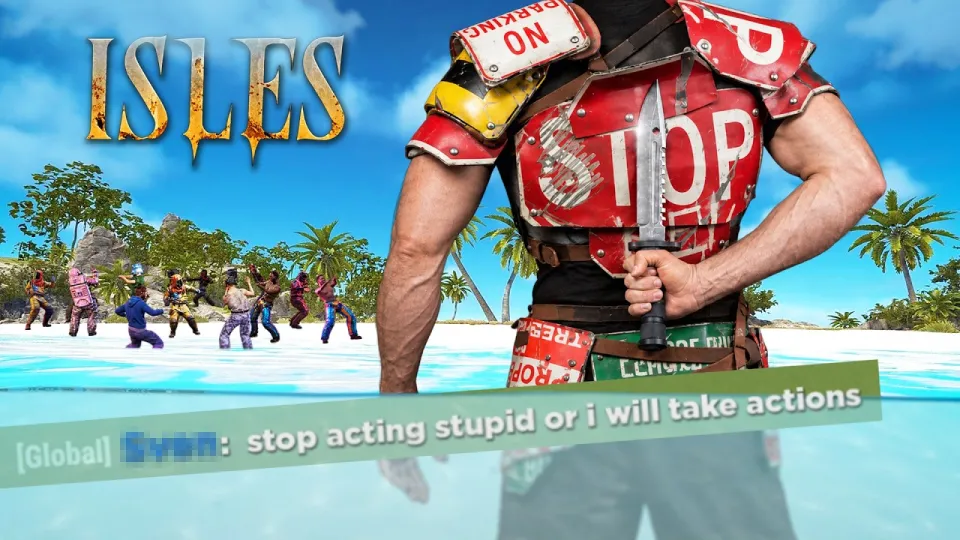
Rust Isles, the server featured in the video, leans into a pirate theme. That framing suggests ships, coastal bases, trade and betrayal, but as the footage and viewer discussion show, the roleplay wrapper does not always survive contact with actual Rust players.
How Stimpee ended up back on an invite-only server
Stimpee had not touched a streamer server in years before this invitation, which is why the video is framed as a return rather than a debut. His reputation as a Rust troll preceded him: viewers openly compared inviting him to letting a troublemaker into a private party.
The server's admins were clearly aware of that reputation. According to the video's comment section, staff went into his inventory to remove weapons they considered too destructive for the environment. Whether that reads as prudent moderation or as preemptive nerfing depends on your view of streamer servers, but it confirms one thing: on Rust Isles, admins watch specific players closely.
The pirate theme versus the clan loyalty test
The most revealing conflict in the video is not a raid but a social one. A clan leader recruited Stimpee with no real screening, then reacted badly when Stimpee hijacked a boat and left the crew stranded on an island.
That sequence exposes the tension inside roleplay servers:
- Recruitment is often casual and trust-based, with little vetting beyond a conversation.
- Betrayal is a core Rust mechanic, and a pirate theme implies stealing and mutiny are on the table.
- When betrayal actually happens, some clan leaders treat it as a personal violation rather than a story beat.
- The argument spills into chat and continues after the fact, which undercuts the roleplay framing.
Viewers picked up on that contradiction: a server built around pirates ended up with stricter expectations of loyalty than a public wipe. The takeaway for anyone joining a similar server is to clarify what counts as fair play before accepting a clan invite.
Why streamer servers feel like a different game
Streamer servers turn Rust into something closer to a social lobby than a survival shooter. Familiar creators recognize each other, admins mediate disputes and encounters are staged for an audience rather than driven by scarcity.
That shift produces mixed reactions. Some viewers enjoy the cameos and the improvised storylines; others find the atmosphere artificial, with adults performing exaggerated personas and moderators hovering over every interaction. The comment thread under the video captures both instincts, describing the server as a playground and its inhabitants as scripted characters.
For players who mainly know Rust through solo wipes, the contrast is stark. On a public server, a boat theft is routine. On Rust Isles, it becomes a moderation incident and a running joke.
Common questions about Rust streamer servers
Most doubts around these servers come down to access, rules and whether the gameplay still counts as Rust.
- Access: invitations come through server owners and existing members, not through a public browser list. There is no application queue to join.
- Rules: expect limits on offline raiding, restrictions on certain weapons, and admin intervention in disputes. Enforcement varies by server.
- Population: small and stable, which means fewer random encounters and more repeated interactions with the same players.
- Content value: good for storytelling and collaborations, weaker for players who want the anonymity and pressure of a full official wipe.
Stimpee's experience illustrates the last point best: his most memorable moment came from breaking a social contract, not from a difficult fight.
What the audience took away from the video
Viewer reaction focused less on loot or base design and more on Stimpee's role inside the group. Several comments framed him as the sanest person in an environment full of performative behavior, while others described the server itself as uncomfortable and over-managed.
The recurring theme is contrast. Streamer servers promise creative freedom but deliver rules, supervision and hurt feelings when someone plays Rust the way Rust is normally played. Stimpee's return after years away made that gap visible, and the video works as a case study for anyone curious about how invite-only Rust communities actually operate.
Useful links
Final thoughts on Rust Isles and streamer server culture
Rust Isles shows what happens when Rust's core mechanics are dropped into a small, rules-heavy community: theft and betrayal stop being background noise and become the main event. Stimpee's boat hijack and the clan leader's reaction say more about streamer server etiquette than any raid could. The video, produced by the Stimpee channel, is a useful look at how invite-only Rust worlds balance entertainment against moderation. If you want to see how these situations play out live rather than in an edited episode, follow Stimpee on Twitch and watch the next server he lands on.
Key takeaways
- Stimpee returned to a Rust streamer server after years away, joining the invite-only Rust Isles server with a pirate theme.
- Streamer servers are private Rust worlds where content creators roleplay, build clans and avoid the toxicity of public officials.
- Admins on Rust Isles reportedly inspected Stimpee's inventory to strip weapons, showing how closely he was watched.
- Clan leaders on the server expected loyalty; Stimpee's boat hijack and stranded crew became a flashpoint rather than roleplay.
- Viewer reaction framed Stimpee as the chaos factor of an otherwise sanitized, rules-heavy Rust environment.
Questions & answers
Can regular players join a Rust streamer server like Rust Isles?
Generally no. These servers are whitelisted and invite-only, with access granted by the owner or existing members. There is no public listing or open application, so the practical route is being a known creator or being vouched for by someone already inside.
Why did admins remove Stimpee's weapons on the server?
Viewer discussion indicates staff inspected his inventory and took away items they considered too destructive for the server's roleplay environment. It reflects a broader pattern on streamer servers, where admins preemptively limit tools that could disrupt staged storylines or other creators' content.
Was the boat hijack against the server's rules?
Nothing in the material suggests a formal rule was broken. The conflict was social: a clan leader recruited Stimpee casually and expected loyalty, while Stimpee treated the theft as normal Rust behavior. That mismatch, not a ban or admin ruling, drove the argument.
Are streamer servers worth watching for players who prefer solo Rust?
They offer something different rather than a replacement. Solo players used to official wipes may find the small population and heavy moderation artificial, but the videos are useful for understanding clan dynamics, negotiation and betrayal without the grind of a full wipe.